Philadelphia rowhouse architecture presents specific pest migration vulnerabilities because structural wall voids, shared party walls, and century-old joist pockets allow bed bugs (*Cimex lectularius*) to travel easily…
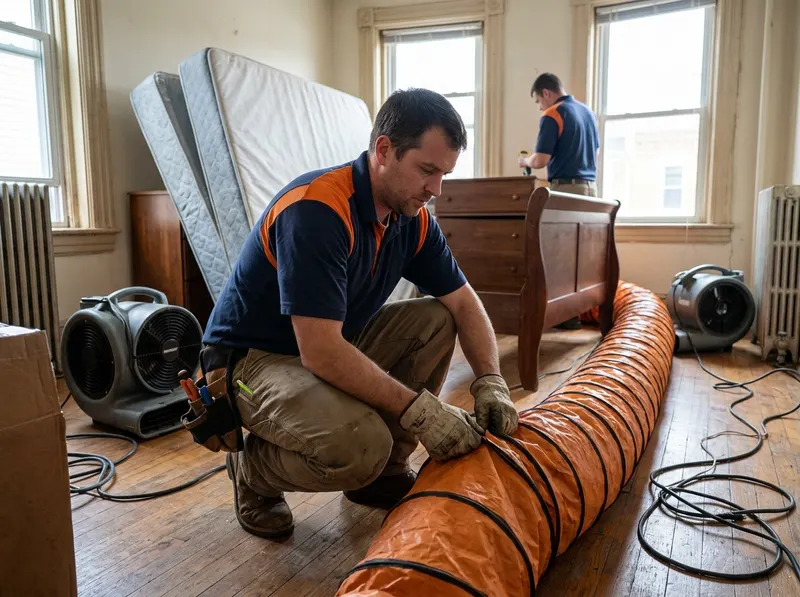
Philadelphia rowhouse architecture presents specific pest migration vulnerabilities because structural wall voids, shared party walls, and century-old joist pockets allow bed bugs (*Cimex lectularius*) to travel easily between adjoining properties in dense neighborhoods like Fishtown, South Philadelphia, and Queen Village. Chemical applications often trigger a repellent dispersion response, driving insects deeper into party walls shared with neighboring homes. Whole-structure thermal remediation overcomes this limitation by raising the structural core, wall voids, subflooring, and dense furniture past the lethal thermal death threshold of 118°F. At sustained ambient temperatures between 122°F and 135°F, insect cellular proteins coagulate, eliminating adults, nymphs, and embryonic eggs without leaving residual chemical film on personal belongings.
Preparing a multi-story home in Northern Liberties or University City requires structured steps to safeguard temperature-sensitive property while ensuring heat penetrates deep harborage areas. Step one involves clearing personal clutter from closets, removing heat-vulnerable items such as candles, musical instruments with organic glues, and prescription pharmaceuticals, and unzipping all mattress encasements. Step two entails technicians running heavy-duty power lines to dedicated electric heating units or running flexible ductwork from exterior trailer-mounted generators into the building envelope. Step three uses directional air movers to circulate 130°F air evenly through high-density areas, monitoring infrared sensors to confirm wall temperatures reach critical eradication thresholds.
Thermal remediation offers high single-intervention clearance rates, whereas traditional chemical applications typically require 2 to 4 separate visits spaced 14 days apart. The functional trade-off is front-end preparation labor and equipment footprint; property owners must coordinate street parking for equipment trucks along tight corridors near Manayunk or Rittenhouse Square and temporarily relocate indoor pets, reptiles, and heat-sensitive possessions for approximately 8 hours. When treating historic stone homes in Chestnut Hill or Mount Airy, interior plaster walls require slightly longer exposure times than standard drywall to guarantee internal core saturation. Every confirmed treatment plan includes a physical on-site evaluation to establish baseline room volumes and calculate precise British Thermal Unit (BTU) requirements.
Every job gets a firm, written price after a free on-site visit.
Tell us about your bed bug thermal remediation job in Philadelphia and we'll send a clear, written quote, usually the same day.
 Kelvoro Pest Solutions